Occupational therapy helps children build the skills they need to participate in everyday activities, at home, at school, and in their communities.
At Gracent, occupational therapy is focused on helping children feel more comfortable in their bodies, more confident in daily routines, and more ready to engage in learning and play.
We don’t just work on skills. We build confidence, independence, and participation where your child lives their life.
Fine motor practice doesn’t matter if it never shows up in real routines. That’s why we start with what your child actually needs and wants to do:
Then we design therapy that fits their sensory profile, attention style, and strengths, so progress sticks!
Get started now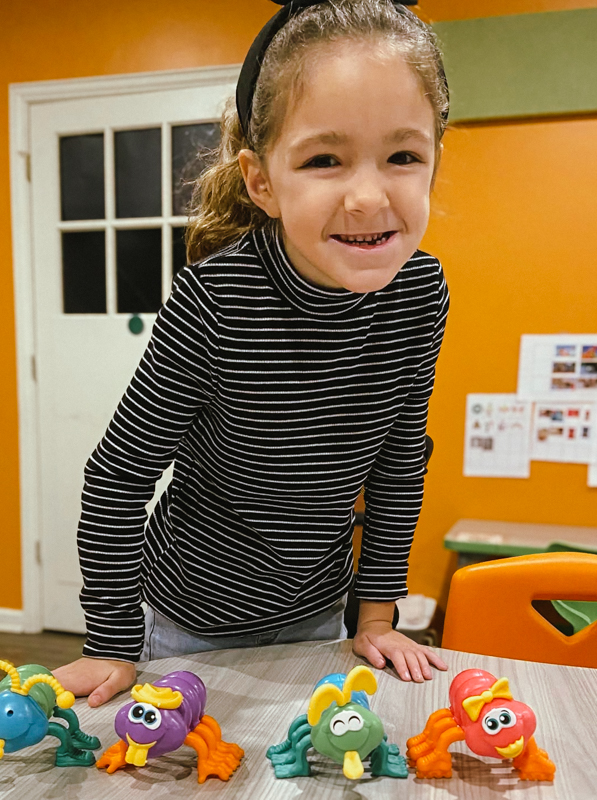


Our OT program supports the skills that help children participate in classrooms and early learning settings, including our readiness program designed for autistic learners.
Kids who benefit from OT in school settings often need help with:
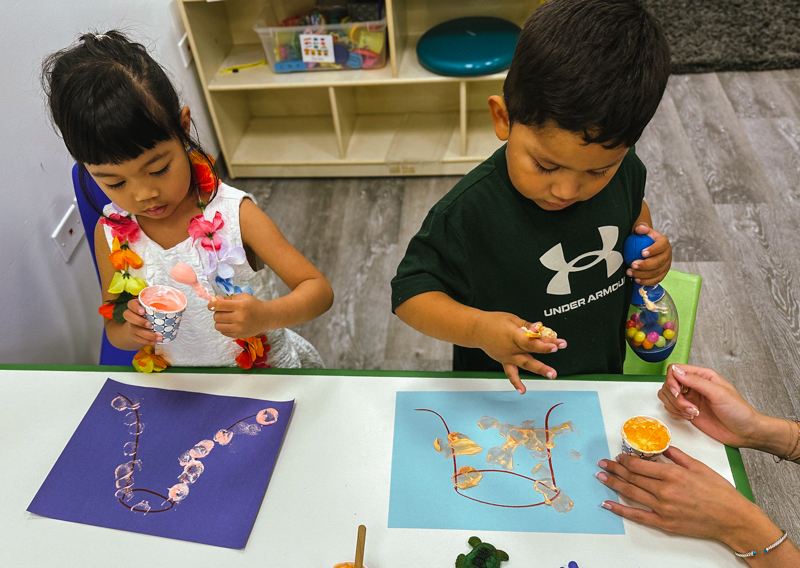
In our centers, children practice these skills in real routines with peers — so independence at school feels possible, not pressured.
Get started now
Motor skills, sensory processing, and behavior are deeply connected — so we offer a team approach when it supports your child’s progress.
Some children benefit from OT alone. Others make faster strides when OT collaborates with:
One coordinated team when needed. OT-only when appropriate.
Always a plan that meets your child exactly where they are.
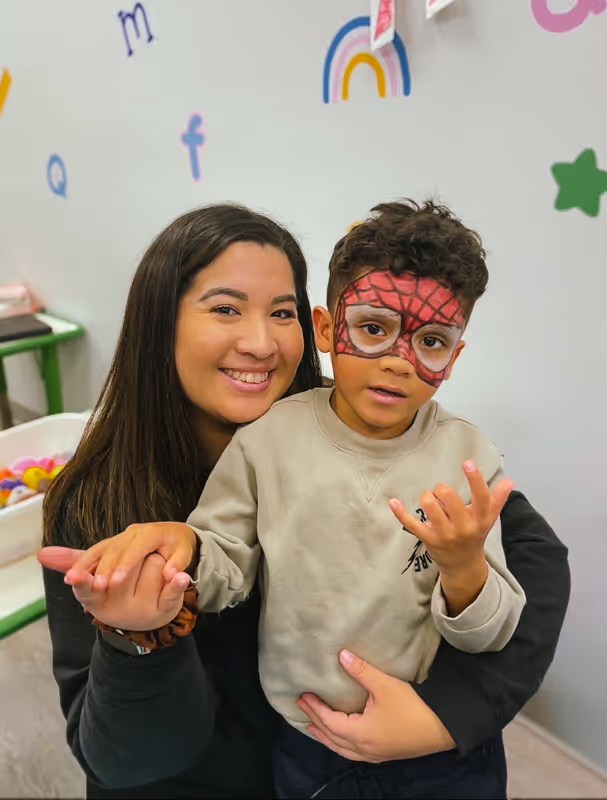
Occupational therapy helps children participate in moments that shape childhood:
We learn about your child’s strengths, challenges, routines, and what matters most to you

ABA, speech, OT, and neuropsychology experts design a unified, personalized plan that reflects how your child learns best

Skills learned in therapy begin to show up naturally — at home, with peers, and in school routines — because our focus is real-world carryover

For the first time, all of his therapists were finally talking to each other. It changed everything.
This is the first therapy plan that felt like it was actually made for my child.
Our daughter walked into kindergarten confident and ready. We couldn’t believe the difference.

If everyday routines—getting dressed, sitting at the table, handling transitions, using eating utensils, writing, or managing emotions—feel harder than they should, OT may help. We’ll guide you through an evaluation to know for sure.
Yes. Many of the children we support are autistic, and our approach is neuroaffirming, sensory-aware, and built around what feels safe and successful for them. When a child also receives ABA at Gracent, our OT team collaborates directly with their BCBA and therapists, aligning goals, sharing strategies, and ensuring everyone is working toward the same outcomes. That means no mixed messages, no conflicting approaches, and no extra coordination for you.
Occupational therapy sessions are active, engaging, and often play-based. Children practice skills through movement, games, and everyday activities designed to support regulation, coordination, and participation.
School services support classroom participation. Our therapy builds the foundational communication skills that make home, community, and school life easier — with more frequent sessions and family involvement.
Yes. We recommend services based solely on what’s clinically appropriate for your child, not a preset package. Many children receive OT only. If we ever believe another service could support progress, we’ll explain why.
Yes. Many behaviors are rooted in regulation or sensory needs. OT helps children understand their bodies, manage input, and feel calmer and more in control.
We do. We support grasp patterns, strength, coordination, and motor planning so writing, cutting, coloring, and classroom tasks feel easier.
OT focuses on how children use their bodies, senses, and motor skills to participate in daily life. While ABA and speech address behavior and communication, OT supports regulation, independence, and functional participation across settings. Often, multiple services are appropriate for children to make the strongest progress.
We do. Insurance coverage for OT varies by plan. Our team helps families verify benefits and understand coverage before starting services.
Occupational therapy is provided at Gracent Pediatric Therapy locations. Availability may vary by center, and our intake team can help you find the best fit.
School OT focuses on classroom participation. Our OT builds foundational sensory, motor, and regulation skills that affect all environments — home, school, community, and social settings — with more time, frequency, and family coaching.
Yes. We give you tools, not homework, and simple strategies that fit into routines you already have.



Gracent Pediatric Therapy — formerly Pine Cone Therapies in Texas and includes three North Shore Pediatric Therapy centers in Illinois — is part of the Gracent network and a sister company to North Shore Pediatric Therapy. Together, we’re creating connected, compassionate care for children and families across every stage of growth.
Services at North Shore Pediatric Therapy and Gracent Pediatric Therapy centers are provided by affiliated professional corporations.