Autism testing, also called an ASD evaluation or ADOS assessment, is how you get clear answers about your child's development, through play-based activities, a parent interview, and standardized tools.
At Gracent, evaluations are available for children 18 months and up, usually within weeks rather than the typical 6–12-month wait, and a diagnosis connects directly to a therapy plan — so you're never left wondering what comes next.
Evaluations take place at our Naperville, IL center. Our Texas centers don't offer autism testing yet. If you're in Texas, call 817-984-8655 and we'll help you find an evaluation provider near you, then help your child start therapy once you have answers.
From early insight to actionable recommendations, testing helps families move forward with confidence.
Research shows that identifying autism early, even as young as 18 months, can make a meaningful difference in a child’s development and long-term outcomes.
Children who begin evaluation and support sooner are more likely to:
Early diagnosis creates opportunities to grow skills when the brain is most receptive to learning, and it connects families with support when they need it most.


We provide:
Your child’s early years matter — and so does the understanding you gain from an early autism evaluation.

Testing isn’t about labels, it’s about opening doors.
An evaluation gives families a clearer picture of how their child learns, communicates, and experiences the world. With that understanding comes direction, confidence, and access to supports that help children grow into their strengths.
For many families, testing can mean:
Most importantly, testing helps shift the focus from “What should we do?” to “Here’s how we can help our child thrive.”
-2.avif)
Evaluations help identify strengths, learning styles, and supports that can make everyday moments easier.
Reach out today to schedule your child’s autism evaluation and get the answers—and support—you’ve been looking for.

I can't stress enough how proud we are of the turnaround my son has been doing. He went from behaviors everyday to smaller behaviors, he went from little words to actually trying to communicate better with everyone that he comes across. Thank you so much for the patience, love and dedication you have given my son.
I can't sing their praises loud enough - convenient location, great staff and a really good experience for my daughter who actually counts down the days between appointments since she has such a good time.
I am so happy with the therapy my child has received from this clinic. My child looks forward to visiting with his therapist and the improvement we have seen in our child in a short time is amazing.

Autism testing is a comprehensive evaluation that looks at how your child communicates, interacts, plays, and experiences the world. It helps create a clearer picture of your child’s strengths and areas where support may be helpful.
Getting started is simple: reach out to our team and we'll schedule an evaluation. A licensed clinician meets with you and your child, gathers developmental history, and uses standardized tools to assess how your child is growing. You'll leave with clear answers — and, if a diagnosis is made, a plan for what comes next.
We evaluate children as young as 18 months. Earlier answers mean earlier support — but it's never "too late," and a good evaluation meets your child exactly where they are.
The ADOS (Autism Diagnostic Observation Schedule) is one of the standardized, play-based tools clinicians use during an autism evaluation. Your child plays and interacts while a trained clinician observes specific developmental markers — it doesn't feel like a test to your child.
Yes — you can contact us directly to schedule an autism evaluation. If your insurance plan requires a referral or prior authorization for coverage, we’ll guide you through the process before your appointment.
Many families wait 6 to 12 months for autism testing elsewhere. We keep wait times short — often just weeks — because every month of waiting is a month without answers or support.
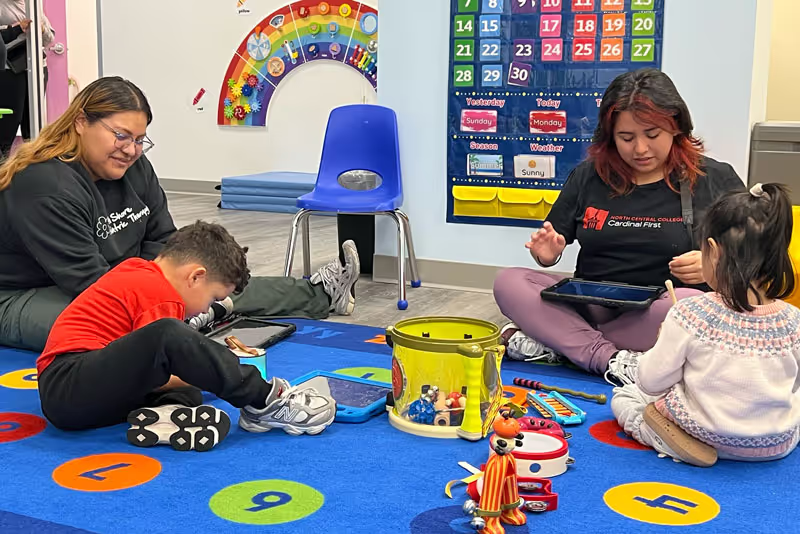
Your child will play — stacking blocks, looking at pictures, doing simple activities — while a clinician observes. You'll answer questions about development and daily life, and you stay in the room the whole time. Most evaluations are calm, unhurried, and designed to feel safe for your child.
You’ll receive initial feedback the same day as the evaluation. The complete written report, including clinical observations and recommendations, is typically delivered 2–4 weeks later.
A formal medical or neuropsychological evaluation (by a licensed clinician) is the type of assessment that can be used for insurance-funded services like ABA and is recognized broadly across systems.
An ADOS (Autism Diagnostic Observation Schedule) is a standardized tool used within a full diagnostic evaluation — it isn’t a diagnosis on its own.
Early Intervention (EI) offers free therapeutic support for young children with developmental delays, but it does not provide a formal diagnosis. A medical evaluation gives a complete picture that can support school and insurance access.
Most insurance plans cover autism evaluations, especially when concerns are documented. We’re in-network with many major plans and will verify your benefits ahead of time and share the codes you can use when checking coverage. If you choose to self-pay, we can walk you through that option as well.
Even without a diagnosis, the evaluation helps uncover strengths and areas for support and gives you tailored recommendations for therapy, educational planning, and next steps.
Absolutely. Because the Chicago Autism Testing Institute is part of Gracent Pediatric Therapy, your child can continue with services like ABA, speech, occupational therapy, and developmental support within the same care network.
A diagnosis isn't the end of the story, it's the beginning of a plan. If your child is diagnosed, we connect you directly to therapy — ABA, speech, and OT — so there's no scramble to find providers or re-tell your story. One team, one plan, one next step.



Gracent Pediatric Therapy — formerly Pine Cone Therapies in Texas and includes three North Shore Pediatric Therapy centers in Illinois — is part of the Gracent network and a sister company to North Shore Pediatric Therapy. Together, we’re creating connected, compassionate care for children and families across every stage of growth.
Services at North Shore Pediatric Therapy and Gracent Pediatric Therapy centers are provided by affiliated professional corporations.