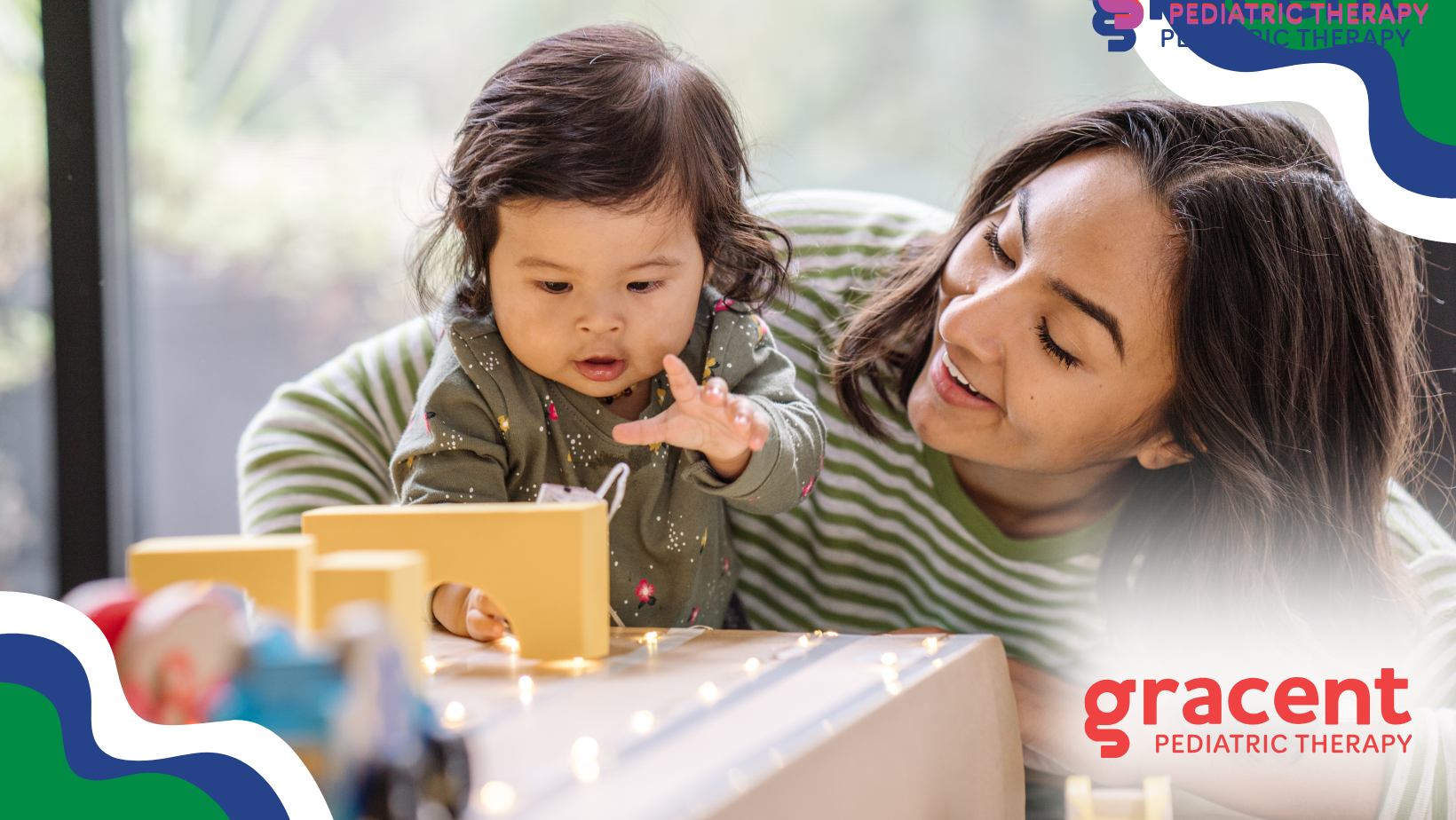
Hand flapping is a common, natural way children show excitement and regulate. Here's what it means and when it's worth a closer look.
.png)
Have a question about your child? Our team will listen, answer your questions, and help you find the right next step, with no pressure.
Maybe your toddler flaps their hands when the bubbles come out, or when a favorite song starts. If you've noticed it and wondered what it means, you're paying attention, and that's a good thing. Here's the plain-language answer: hand flapping is a common, natural way for children to express big feelings and regulate their bodies. On its own, it isn't a sign that anything is wrong.
Hand flapping is a form of "stimming," short for self-stimulatory behavior: repetitive movements or sounds that help a person feel regulated, express emotion, or take in sensory input. Hand flapping might look like:
Everyone stims in some way. Adults tap a foot in a long meeting, twirl their hair, or click a pen. Children's stims are simply easier to notice, because kids haven't learned to make them small or quiet, and they don't need to.
Hand flapping is very common in babies and toddlers. Many young children flap when they're excited, happy, or concentrating, and for many it naturally becomes less noticeable as they grow and find other ways to show their feelings. Seeing your baby or toddler flap their hands is not, by itself, a reason for concern.
Children often flap their hands when they are:
Looking at the whole picture of your child's development tells you far more than any single behavior.
Stimming is a healthy, useful tool. It helps children manage sensory input, process emotions, focus, and show joy. Neurodivergent children, including autistic children and children with ADHD, often stim more, because their brains process sensory information differently. For them, stimming can be an important source of comfort and self-regulation, and it's a part of who they are.
That's why we don't treat stimming as something to stop. A child who is flapping happily is a child who is regulating and expressing themselves.
Hand flapping is more common in autistic children, but many children who flap their hands are not autistic, and hand flapping alone can't tell you whether a child is autistic. Autism is identified by looking at a group of characteristics together, which can include:
If you notice hand flapping along with several of these, talking with your pediatrician or a specialist can help you understand how your child experiences the world. An evaluation isn't about finding something wrong. It's about getting a clearer picture so you know how best to support your child.
Hand flapping itself doesn't need to be fixed. It may be worth talking with a professional if:
If repetitive movements seem to come with distress rather than comfort, or your child often seems overwhelmed, a therapist can help you understand what's going on and what helps your child feel calm and safe.
If any repetitive movement is hurting your child, for example head banging or biting, it's a good idea to get guidance. An occupational therapist can help find safer ways for your child to get the same sensory input.
If you're also noticing differences in speech, play, or how your child connects with others, a developmental evaluation can give you answers sooner, so support can begin when it's most helpful.
If you're noticing hand flapping alongside other differences, an autism evaluation can give you clear answers. In the meantime, these steps can help:
Hand flapping is a natural way many children show excitement, calm themselves, and make sense of their world. On its own, it's not something to worry about or to stop. If it comes alongside other developmental differences, or if your child seems distressed, getting answers early can help you support them in the way that fits who they are.
If you have questions about your child's development or are thinking about an autism evaluation, reach out to Gracent Pediatric Therapy. We'll listen, answer your questions, and help you figure out the right next step for your family.
Hand flapping on its own is common, and it's often simply how a child shows excitement. It's worth a closer look when it comes with other differences, like few words, little back-and-forth play, or big reactions to changes in routine. If that sounds like your child, a conversation with a specialist can give you a clear answer. That's all it is: an answer, and a plan if you want one.
Not sure where to start? Call 817-984-8655. We'll listen, answer your questions, and help you find the right next step, with no pressure.



Gracent Pediatric Therapy — formerly Pine Cone Therapies in Texas and includes three North Shore Pediatric Therapy centers in Illinois — is part of the Gracent network and a sister company to North Shore Pediatric Therapy. Together, we’re creating connected, compassionate care for children and families across every stage of growth.
Services at North Shore Pediatric Therapy and Gracent Pediatric Therapy centers are provided by affiliated professional corporations.